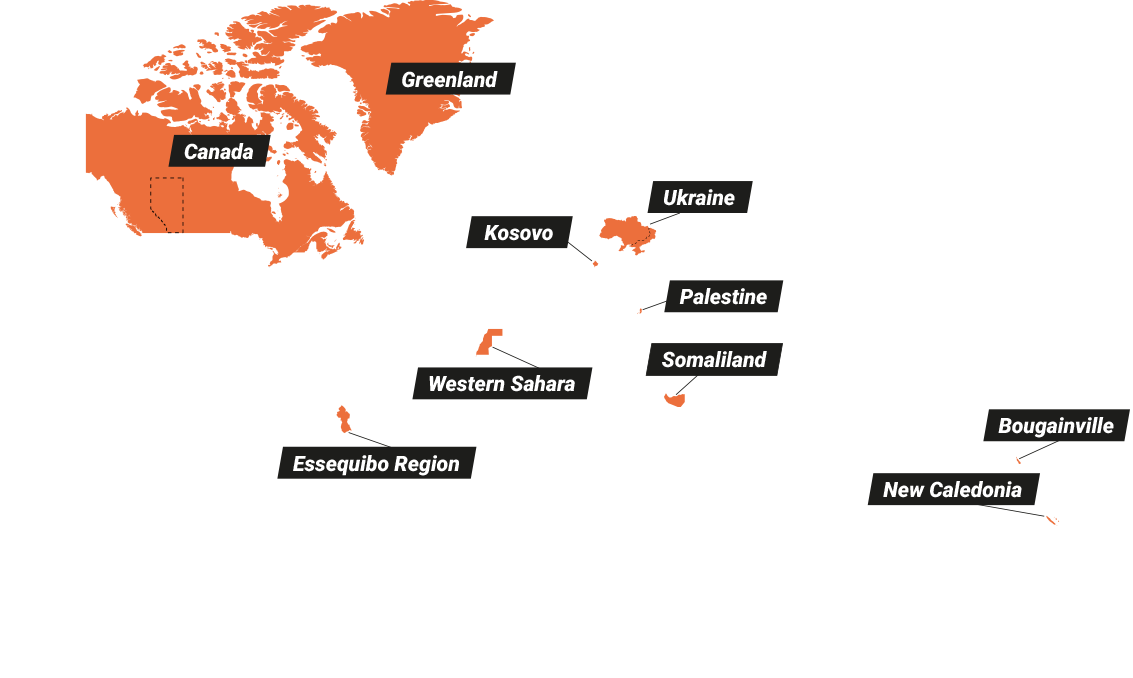
The State Succession Watchlist 2026 identifies 10 states or territories where state succession events are likely to develop in 2026. The Watchlist provides insights into processes that could lead to complex legal, political, financial, commercial, and diplomatic consequences, with both regional and global implications, potentially affecting international relations and arrangements. The 2026 Watchlist highlights key trends, mostly emerging from the 2025 State Succession Index.
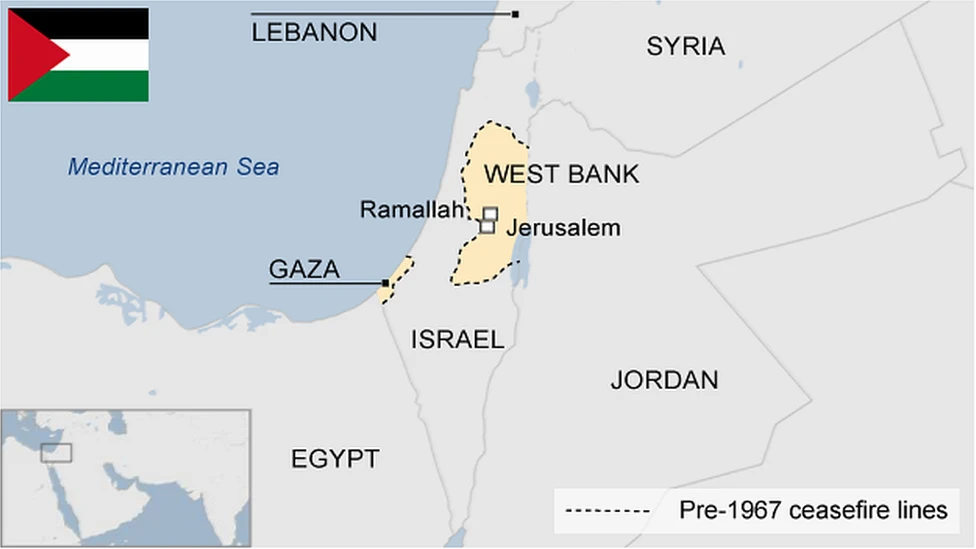
Palestine
Risk Level: High (Structural Contestation). Status: Partial Recognition; Contested Territorial Governance. Watchlist Basis: Recognition dynamics; Governance restructuring; Potential transitional authority framework.
Overview
The question of Palestinian statehood remains one of the most structurally contested issues in the contemporary international legal order. As of 2026, the State of Palestine is recognised by a significant majority of UN Member States but is not a full member of the United Nations. Recognition remains geographically uneven, with several influential Western states historically withholding recognition, though additional recognitions were extended in 2025.
The war in Gaza (since 2023) has materially altered the political and diplomatic landscape. Beyond the humanitarian and security dimensions, the conflict has intensified international debate concerning final-status arrangements, recognition policy, and future governance of the Gaza Strip.
A ceasefire framework adopted in late 2025 introduced a proposed multi-phase international plan for conflict termination and reconstruction. Reported elements include demilitarisation arrangements in Gaza, restructuring or removal of Hamas from formal governance roles, and phased withdrawal of Israeli forces. The framework also envisages the establishment of a temporary Palestinian technocratic administrative body responsible for civil governance during the transitional period.
Implementation oversight has reportedly been assigned to a multinational mechanism referred to as the “Board of Peace,” which has now entered an operational phase. The body is expected to supervise ceasefire compliance, coordinate reconstruction, and monitor transitional governance arrangements in Gaza. However, the institutional design, legal authority, and relationship of this mechanism to the Palestinian Authority, Israel, and existing international legal frameworks remain insufficiently defined, leaving unresolved questions regarding accountability, jurisdiction, and the longer-term implications for Palestinian statehood and territorial governance.
Legal Continuity Exposure
Recognition Dynamics
The incremental expansion of bilateral recognitions strengthens Palestine’s international legal personality but does not automatically resolve questions of effective territorial control. Recognition remains politically divided, and Palestine’s UN status remains that of a non-member observer State.
From an SSI perspective, this produces high structural contestation but low immediacy of classical succession, as no widely recognised transfer of sovereign title has occurred.
Governance Transition in Gaza
The proposed establishment of a technocratic administrative committee in Gaza introduces potential transitional governance ambiguity:
• If authority is exercised under Palestinian Authority auspices, this may reinforce claims of unified Palestinian representation.
• If structured as an internationally supervised interim body, questions arise regarding delegated authority, accountability, and treaty continuity.
• Continued informal influence by Hamas, even absent formal office, may complicate effective governance assessments.
At present, these arrangements appear transitional rather than constitutive of a new state entity. However, prolonged separation between Gaza and the West Bank could incrementally entrench dual governance realities.
Territorial and Security Control
Effective control remains fragmented among Israel, Palestinian authorities, and de facto local actors. Until a stable and widely recognised governing authority exercises consolidated territorial administration, classic state succession scenarios remain unlikely.
However, governance restructuring in Gaza introduces potential medium-term exposure if it evolves into a distinct political entity or externally administered regime.
2026 Outlook
Three principal trajectories merit monitoring:
1. Managed Transitional Consolidation. Gaza administration is transferred to a technocratic body operating under Palestinian Authority oversight with broad international support. Recognition dynamics continue incrementally, but without immediate UN membership change.
2. Fragmented Dual Governance Entrenchment. Gaza develops an internationally supervised but functionally separate governance structure, deepening institutional division from the West Bank and raising long-term continuity and representation questions.
3. Renewed Instability. Ceasefire collapse or incomplete demilitarisation disrupts governance transition, freezing recognition advances and reinforcing territorial fragmentation.
Analytical Note
The inclusion of Palestine/Gaza in the 2026 Watchlist reflects enduring structural contestation of sovereignty and evolving governance frameworks, not a prediction of imminent state succession.
Under SSI methodology, this case scores high in Recognition Sensitivity and Governance Volatility, while immediate treaty succession risk remains contingent on formalised institutional change or status alteration within the UN system.
Sources:
● https://www.aljazeera.com/news/2025/9/29/heres-the-full-text-of-trumps-20-point-plan-to-end-israels-war-on-gaza
● https://www.nytimes.com/2026/01/27/world/middleeast/board-of-peace-trump-gaza.html
● https://www.nbcnews.com/world/europe/trump-board-of-peace-countries-davos-cost-nato-what-know-rcna255433
● https://www.aljazeera.com/news/2025/9/23/which-are-the-150-countries-that-have-recognised-palestine-as-of-2025
● https://www.timesofisrael.com/israel-says-hamas-may-soon-cede-gaza-to-technocrats-but-will-keep-grip-on-strip/
● https://www.bbc.com/news/world-middle-east-14630174
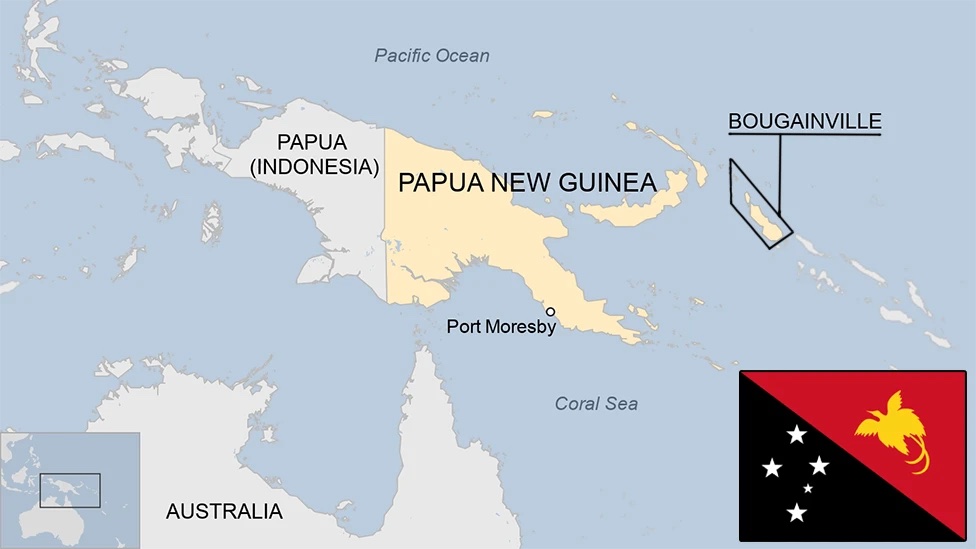
Bougainville
Risk Level: High (Negotiated Secession Pathway). Status: Post-Referendum Transition; Parliamentary Approval Pending. Watchlist Basis: Active negotiated independence process; Potential unilateral declaration exposure.
Overview
The Autonomous Region of Bougainville remains the most advanced negotiated secession process currently underway in the Pacific. Following the 2019 referendum – in which approximately 97% of participating voters supported independence from the Independent State of Papua New Guinea (PNG) – formal post-referendum consultations have continued between the two governments.
Under the 2001 Bougainville Peace Agreement and PNG constitutional framework, the referendum result is non-binding and requires ratification by the National Parliament of Papua New Guinea. As of early 2026, Parliament has not yet voted to approve independence, despite earlier political commitments to table the matter.
In 2025, Bougainville conducted presidential and legislative elections, reaffirming the independence mandate. President Ishmael Toroama secured re-election on a platform centred on full sovereignty. The Bougainville Leaders Forum subsequently recommended 1 September 2027 as the proposed independence date, contingent upon parliamentary approval in PNG.
The process therefore remains legally incomplete and politically sensitive within PNG.
Legal Continuity Exposure
Negotiated Secession Framework
Bougainville represents a rare example of a structured, constitutionally embedded secession pathway. Unlike unilateral movements, the legal architecture anticipates possible independence but conditions it on parliamentary ratification.
If PNG’s Parliament approves independence:
• A consensual state succession scenario would likely unfold.
• Treaty continuity arrangements, asset division, debt allocation, and international organisational membership would require structured negotiation (provisions on state property division have already contained in the first draft Constitution).
• Recognition exposure would be low to moderate, given the consensual nature of separation.
Parliamentary Uncertainty. Domestic political divisions within PNG introduce material uncertainty. Concerns remain that parliamentary approval could be delayed or rejected.
Should Parliament withhold consent indefinitely, political pressure within Bougainville may intensify. President Toroama has publicly suggested that prolonged obstruction could prompt reconsideration of strategy, raising the possibility – though not inevitability – of unilateral declaration.
Unilateral Declaration Scenario
A unilateral declaration of independence (UDI), absent PNG consent, would significantly increase recognition sensitivity, regional diplomatic strain, and legal ambiguity regarding treaty succession and state responsibility. However, as of 2026, negotiations remain formally ongoing and institutional channels remain open.
2026 Outlook
Three principal trajectories are identifiable:
1. Managed Ratification Path. PNG Parliament approves independence timetable negotiations, enabling structured transition toward a 2027 independence date.
2. Prolonged Deferral. Parliamentary inaction delays resolution, sustaining political uncertainty but preserving legal order.
3. Escalatory Shift. Frustration within Bougainville leads to movement toward unilateral action, increasing recognition and continuity volatility.
At present, the case reflects high procedural momentum but incomplete legal finalisation.
Analytical Note
Bougainville differs from most Watchlist entries in that it follows a pre-agreed constitutional secession mechanism, rather than armed conflict or purely unilateral assertion.
Its inclusion in the 2026 Watchlist reflects the approaching decision point in PNG’s Parliament and the narrowing window between negotiated transition and potential unilateral escalation.
Under SSI methodology, Bougainville scores high in:
• Secession Procedural Activation
• Negotiated Succession Exposure
• Contingent Recognition Risk
Immediate instability risk remains moderate, but the structural importance of the pending ratification decision warrants close monitoring.
Sources:
● https://thediplomat.com/2025/09/independence-is-destiny-toroama-wins-bougainville-presidential-election/
● https://www.rnz.co.nz/international/pacific-news/544577/bougainville-leaders-forum-recommends-september-2027-for-independence
● https://aapnews.aap.com.au/news/bougainville-firm-on-independence-after-latest-talks
● https://www.bbc.com/news/world-asia-pacific-15436981
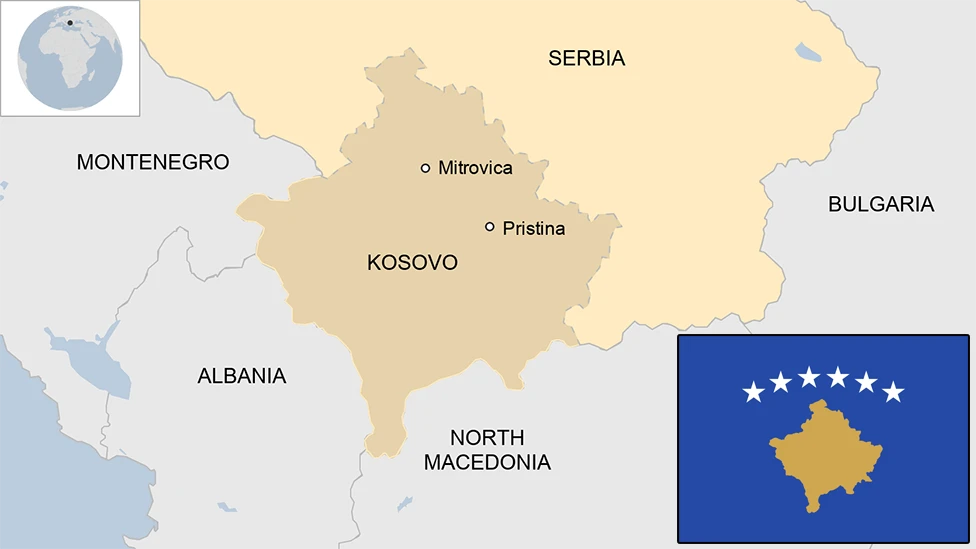
Kosovo
Risk Level: Medium–High (Recognition Plateau; Normalisation Fragility). Status: Partially Recognised State; EU-Facilitated Dialogue Ongoing. Watchlist Basis: Incomplete international recognition; Serbia normalisation conditionality; Northern governance volatility.
Overview
The Republic of Kosovo, which declared independence from the Republic of Serbia in 2008, is recognised by a majority of UN Member States but remains outside the United Nations due to opposition from Serbia and veto-holding members of the UN Security Council.
Kosovo has consolidated internal governance and exercises effective control over most of its claimed territory. However, tensions persist in Serb-majority municipalities in northern Kosovo, and the EU-facilitated Belgrade–Pristina dialogue has produced agreements that remain only partially implemented.
As of 2026, Kosovo’s international status remains stabilised but incomplete. While it continues to be recognised by a majority of UN Member States, it has not yet achieved universal recognition or UN membership. Nevertheless, 2025 saw a renewed trajectory of diplomatic recognition, with additional recognitions reportedly including Kenya, Sudan, Syria, and the Bahamas.
Legal Continuity Exposure
Recognition Plateau
Kosovo is recognised by over 100 UN Member States but not by several key actors, including Serbia, Russia, China, and five EU Member States. This creates durable but incomplete international legal personality, barriers to UN membership, and constraints on treaty participation where universal recognition is required.
Serbia–Kosovo Normalisation Process The EU-brokered dialogue framework aims at “normalisation” rather than immediate mutual recognition. Core issues include the establishment of the Association/Community of Serb-majority Municipalities, mutual non-blocking commitments in international organisations, and de facto recognition formulas without formal diplomatic recognition.
Northern Governance and Institutional Authority
Periodic tensions in northern municipalities, including disputes over local elections, policing authority, and administrative control, create governance sensitivity. While these do not currently amount to territorial fragmentation, sustained instability could trigger renewed external political intervention, strengthen partition rhetoric in some political circles, and reintroduce debate about territorial reconfiguration.
State Succession Considerations
Kosovo represents a post-secession consolidation case, distinct from active secession movements such as Bougainville. Succession-related questions sometimes discussed in legal and policy analysis include potential disputes over state property and assets with Serbia, access to archives and pension records from the Yugoslav period, and the treatment of financial assets or liabilities associated with the former Yugoslav federation. Unlike the five recognised successor republics of Yugoslavia, Kosovo was not included in the 2001 Agreement on Succession Issues, so its claims were not formally settled through that framework.
2026 Outlook
Two trajectories merit monitoring:
1. Incremental Normalisation. Continued EU-mediated progress reduces friction without full mutual recognition; recognition map remains stable.
2. Recognition Breakthrough. One or two additional EU non-recognisers or other states extend recognition.
Analytical Position Within the SSI Framework
Under SSI methodology, Kosovo scores:
• Moderate Recognition Sensitivity
• Low Immediate Succession Activation
• Moderate Governance Volatility (Northern Municipalities)
• Latent Multilateral Membership Exposure
Kosovo represents a mature but unfinished secession case. It is unlikely to generate sudden sovereignty rupture in 2026, but it remains one of the most consequential partially recognised states whose trajectory could shift if:
• Serbia–Kosovo relations fundamentally change,
• EU enlargement dynamics accelerate,
• Great power positioning within the UN Security Council evolves.
Its inclusion would add balance to the Watchlist by capturing a post-independence consolidation case under diplomatic normalisation pressure, complementing more volatile or early-stage secession cases elsewhere.
Analytical Note
These entries reflect technical assessments under the State Succession Index methodology. Inclusion in the Watchlist does not imply endorsement, recognition, or prediction of any outcome. Analysis is based exclusively on publicly verifiable developments and observable state practice related to sovereignty claims, legal contestation, and international judicial processes.
Western Sahara
Risk Level: Medium–High (Recognition Rebalancing). Status: Protracted Non-Self-Governing Territory Dispute. Watchlist Basis: Shifting recognition dynamics; Autonomy framework consolidation; Declining diplomatic space for rival claimant.
Overview
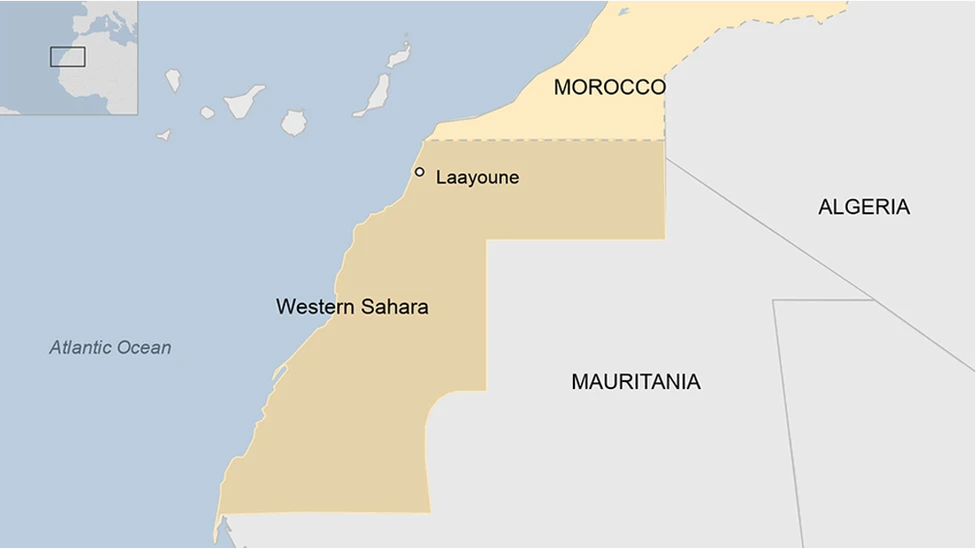
Western Sahara remains one of the longest-running unresolved territorial disputes on the UN agenda. The Sahrawi Arab Democratic Republic (SADR), proclaimed in 1976 by the Polisario Front, claims sovereignty over the territory, while the Kingdom of Morocco exercises de facto control over the majority of the area and asserts full sovereignty.
The United Nations continues to classify Western Sahara as a Non-Self-Governing Territory. However, diplomatic momentum in recent years has increasingly favoured Morocco’s autonomy proposal, which envisages Western Sahara as a self-governing entity under Moroccan sovereignty rather than an independent state.
In 2025, the United Nations Security Council adopted Resolution 2797 (2025), which extended the mandate of the UN Mission for the Referendum in Western Sahara (MINURSO) and reiterated support for a “realistic, practicable, and enduring” political solution. While the resolution did not formally recognise Moroccan sovereignty, reporting indicates that language within it was widely interpreted as aligning more closely with Rabat’s autonomy framework than with a referendum-based independence model.
In early 2026, senior officials of the European Union publicly endorsed Morocco’s autonomy proposal as a credible basis for settlement, signalling further diplomatic consolidation around Rabat’s position. Meanwhile, Algeria and a number of African and Latin American states continue to recognise the SADR.
The dispute remains unresolved, but the diplomatic balance appears to be gradually shifting.
Legal Continuity Exposure
Recognition Dynamics
The SADR is recognised by a limited but persistent group of states and is a member of the African Union. However, several states that previously recognised the SADR have withdrawn or suspended recognition over time. Recent diplomatic endorsements of Morocco’s autonomy plan do not constitute formal annexation recognition in all cases, but they reflect a recalibration of international positioning. This creates increased recognition asymmetry, reduces the likelihood of broad-based recognition expansion for the SADR, and contributes to the greater entrenchment of Morocco’s de facto control.
Autonomy Versus Independence Framework
The core legal question remains whether Western Sahara’s final status will be resolved through a self-determination referendum including independence as an option, or through an autonomy arrangement under Moroccan sovereignty. If autonomy under Morocco is formalised through a negotiated settlement endorsed by the UN and accepted by key regional actors, this would likely close the pathway toward independent statehood, eliminate state succession exposure, and consolidate Moroccan territorial title in practice. Conversely, a breakdown in diplomacy combined with renewed armed confrontation would elevate recognition volatility.
State Succession Considerations
At present, no imminent state creation or sovereignty transfer is underway. The territory is subject to competing claims, but effective control rests largely with Morocco.
Under SSI methodology, Western Sahara reflects:
• Moderate Recognition Sensitivity,
• Low Immediate Treaty Succession Risk,
• Long-Term Status Uncertainty.
2026 Outlook
Two plausible trajectories merit monitoring:
1. Autonomy Consolidation. Continued diplomatic alignment around Morocco’s autonomy proposal reduces prospects for independence and narrows international support for the SADR.
2. Stalemate Continuation. MINURSO mandate extensions persist without substantive political breakthrough.
Analytical Note
Western Sahara differs from cases such as Bougainville or Quebec, Canada in that no active, mutually agreed referendum pathway toward independence is presently in motion. It also differs from Ukraine in that the dispute is not defined by large-scale active interstate war, but by prolonged contested status and diplomatic positioning.
Its inclusion in the 2026 Watchlist reflects:
• Gradual international realignment,
• The potential closing of the independence window,
• The enduring legal ambiguity surrounding one of the UN’s longest-running decolonisation questions.
Under SSI assessment, Western Sahara remains a structurally contested territory with declining but not extinguished independence exposure.
Sources:
● https://press.un.org/en/2025/sc16208.doc.htm
● https://www.aljazeera.com/news/2025/10/31/un-security-council-supports-moroccos-plan-for-western-sahara
● https://euobserver.com/200913/eu-backs-moroccos-plan-for-western-sahara-as-brussels-edges-closer-to-rabat/
● https://www.bbc.com/news/world-africa-14115273
New Caledonia
Risk Level: Medium–High (Autonomy Reconfiguration Under Strain). Status: Institutional Reform Stalled; Referendum Framework Uncertain. Watchlist Basis: Constitutional restructuring within metropolitan state; Electoral deferral; Independence movement fragmentation.
Overview
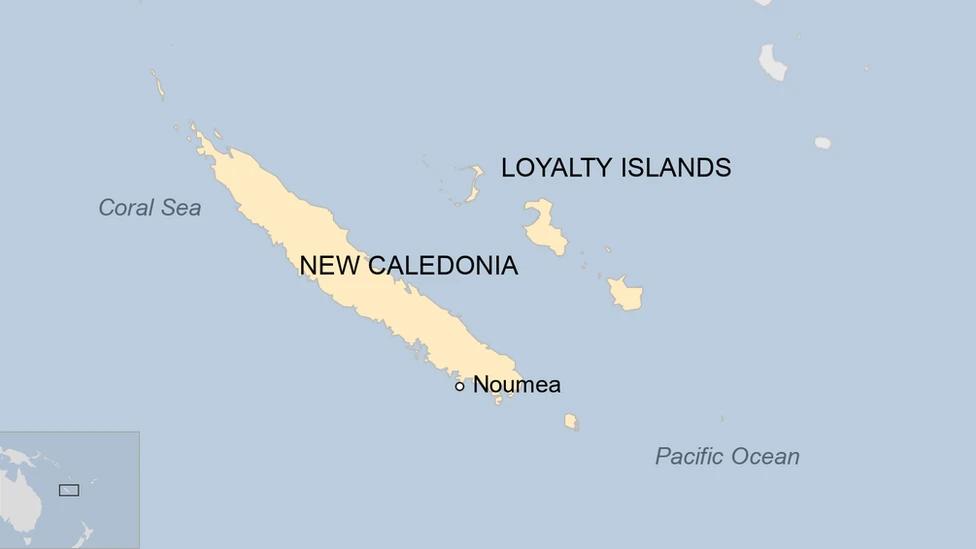
The political future of New Caledonia, a French overseas territory in the Pacific, remains unsettled in 2026 despite efforts to stabilise relations following years of referendum cycles and unrest.
In 2025, negotiations between local political actors and the Government of France produced the proposed Bougival Accord. The agreement envisaged the creation of a “State of New Caledonia” within the French Republic – a novel constitutional formula granting enhanced autonomy, expanded local citizenship provisions, and revised institutional arrangements while maintaining French sovereignty.
Initial optimism surrounding the accord proved short-lived. The Kanak and Socialist National Liberation Front (FLNKS), the principal pro-independence coalition, withdrew support, citing the absence of provisions for a new self-determination referendum. Other pro-independence and pro-Kanak groups similarly opposed the arrangement, arguing that it diluted the decolonisation trajectory established under the 1998 Nouméa Accord framework.
In early 2026, Paris convened further consultations, resulting in a modified proposal (referred to as the Elysée-Oudinot discussions). However, these talks were boycotted by FLNKS and aligned actors, limiting their representative legitimacy. France subsequently abandoned the proposed timetable for a referendum to approve the Bougival framework.
Compounding tensions, provincial elections have been postponed multiple times, with the current Congress having originally been elected in 2019. Elections are now anticipated in mid-2026.
Legal Continuity Exposure
Constitutional Reconfiguration Without Secession
Unlike classical independence cases, New Caledonia presently reflects a recalibration of autonomy within an existing sovereign state rather than an active secession process. The Bougival proposal would have created a formally designated “State” within the French constitutional order, expanded differentiated citizenship arrangements, and adjusted institutional competences. Such reforms could have introduced complex questions regarding internal constitutional identity and external representation, but they would not have constituted state succession in the international legal sense. With the proposal stalled, immediate succession exposure remains low.
Referendum Pathway Uncertainty
The Nouméa Accord process provided for a limited series of independence referendums, culminating in the 2021 vote boycotted by pro-independence forces. The absence of consensus on whether a further referendum should occur has reopened structural tensions. If a new referendum were negotiated and approved, this would significantly elevate SSI indicators relating to secession activation, recognition sensitivity, and treaty continuity planning. At present, however, no agreed referendum mechanism is in motion.
Electoral Legitimacy and Governance Stability. Repeated postponement of provincial elections raises institutional legitimacy concerns. While this does not directly trigger succession exposure, prolonged electoral deferral can undermine governance stability, entrench polarisation between pro-France and pro-independence blocs, and increase volatility surrounding future constitutional negotiations.
2026 Outlook
Two principal scenarios merit monitoring:
1. Managed Autonomy Reset. Elections proceed in 2026, producing a renewed Congress capable of re-engaging negotiations within the French constitutional framework.
2. Negotiation Paralysis. Continued fragmentation among local actors prevents agreement on institutional reform or referendum mechanisms, sustaining medium-level political volatility.
Analytical Note
New Caledonia differs from Bougainville in that no currently agreed legal pathway toward independence is active. The present dynamic concerns internal constitutional redesign within a metropolitan sovereign framework rather than imminent state creation. Its inclusion in the 2026 Watchlist reflects the fragility of post-referendum settlement efforts, institutional uncertainty caused by electoral postponements, and the unresolved long-term status question.
Under SSI methodology, New Caledonia currently scores:
• Moderate Governance Volatility
• Latent Secession Sensitivity
• Low Immediate Treaty Succession Risk.
Continued monitoring is warranted should referendum mechanisms be formally revived or negotiations collapse further.
Sources:
● https://www.lowyinstitute.org/the-interpreter/support-bougival-accord-waning-new-caledonia
● https://www.politico.eu/article/french-effort-create-state-new-caledonia-collapses-kanak-pacific/
● https://islandsbusiness.com/news-break/new-caledonia-agreement-signed-in-paris/
● https://pina.com.fj/2025/12/22/france-delays-new-caledonia-referendum/
● https://www.bbc.com/news/world-asia-pacific-16740838
Alberta/Canada
Risk Level: Medium (Escalating). Status: Procedural Escalation. Watchlist Basis: Anticipated referendum activity; measurable increase in Sovereignty Change and Governance Transition indicators.
Overview
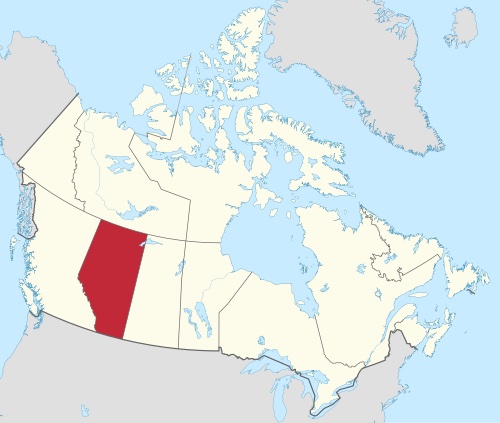
In 2026, the Province of Alberta has emerged as a focal point of internal sovereignty discourse within Canada. In December 2025, the Government of Alberta approved a citizen initiative petition aimed at putting an independence referendum on the ballot.
A grassroots separatist movement is gathering signatures to compel a secession referendum in October 2026. In accordance with Alberta’s Referendum Act, in order for a referendum question to be validated and perhaps passed, organizers must gather 177,732 valid signatures by May 2026.
While no formal declaration of secession or constitutional rupture has occurred, the activation of a referendum mechanism constitutes a procedural step toward potential sovereignty change. Under the State Succession Index (SSI) framework, this development reflects a measurable increase in both the Sovereignty Change and Governance Transition indicators and has contributed to a moderate rise in Alberta’s composite score.
Developments remain within Canada’s constitutional order. However, if advanced, an independence process would generate significant legal continuity questions requiring both domestic and international attention.
Legal Continuity Exposure
Should a sovereignty process move forward, several areas of succession-related exposure would arise:
Treaty Continuity
An independent Alberta would not automatically succeed to treaties concluded by Canada. Questions would arise regarding participation in multilateral and bilateral agreements, including trade frameworks such as the United States–Mexico–Canada Agreement (USMCA), WTO membership, environmental treaties, and investment protection instruments. Recent trade tensions between Canada and the United States increase the economic sensitivity of treaty continuity in any succession scenario.
Public Debt and Financial Obligations
A negotiated apportionment of Canada’s federal public debt, pension liabilities, sovereign guarantees, and related financial obligations would be required. Debt allocation would likely become central to any managed transition.
Property and Natural Resources
Legal issues would include division of federal property located within Alberta, regulatory authority over infrastructure, and jurisdiction over natural resources and state enterprises.
Citizenship and Mobility
An independence scenario would require determination of nationality status, potential dual citizenship arrangements, mobility rights within Canada, and consular protection frameworks.
Indigenous Treaty Obligations
Particular legal complexity would arise regarding the continuity of historic treaties between Indigenous peoples and the Crown, as well as constitutional protections currently embedded within Canada’s federal system.
Recognition Dynamics
Canada’s constitutional framework, as articulated in the Reference re Secession of Quebec (1998), requires negotiation in the event of a clear referendum mandate. Any unilateral declaration outside that framework would likely encounter significant domestic and international recognition barriers.
Reports of engagement between U.S. political figures and Alberta separatist actors introduce an external rhetorical dimension. However, no state has formally expressed recognition intent regarding Alberta. Recognition exposure therefore remains contingent rather than active.
2026 Outlook
Three principal pathways are identifiable:
• De-escalation. The petition fails to qualify or political momentum subsides, reducing succession exposure.
• Managed Constitutional Process. A referendum qualifies and produces a mandate, triggering negotiations within constitutional parameters.
• Contested Escalation: A unilateral or legally disputed process increases sovereignty and recognition risks.
At present, Alberta remains firmly within Canada’s constitutional order. Inclusion in the 2026 Watchlist reflects early-stage procedural escalation and increased legal exposure – not imminent state dissolution.
Analytical Note
This entry reflects technical assessment under the State Succession Index methodology. Inclusion does not imply endorsement, recognition, or prediction of statehood outcomes. Analysis is based exclusively on publicly verifiable information and observable developments.
Sources:
● https://econofact.org/the-impact-of-the-trade-war-on-canada
● https://www.nytimes.com/2026/01/27/us/politics/carney-trump-davos-speech-canada-us.html
● https://www.the-independent.com/news/world/americas/us-politics/canada-trump-us-military-invasion-b2904279.html
● https://time.com/7297490/trump-plan-to-annex-canada-51st-state-mark-carney/
● https://www.france24.com/en/live-news/20251030-30-years-after-cliffhanger-vote-quebec-separatists-voice-hope-for-independence
● https://www.cnn.com/2026/01/29/americas/canada-carney-trump-alberta-separatists-latam-intl
● https://www.iconnectblog.com/constitutional-autonomy-or-constitutional-overreach-reflections-on-quebecs-bill
Essequibo region/Guyana
Risk Level: Medium (Escalating). Status: International Legal Contestation. Watchlist Basis: Increased procedural escalation; Recognition and Sovereignty Change exposure.
Overview
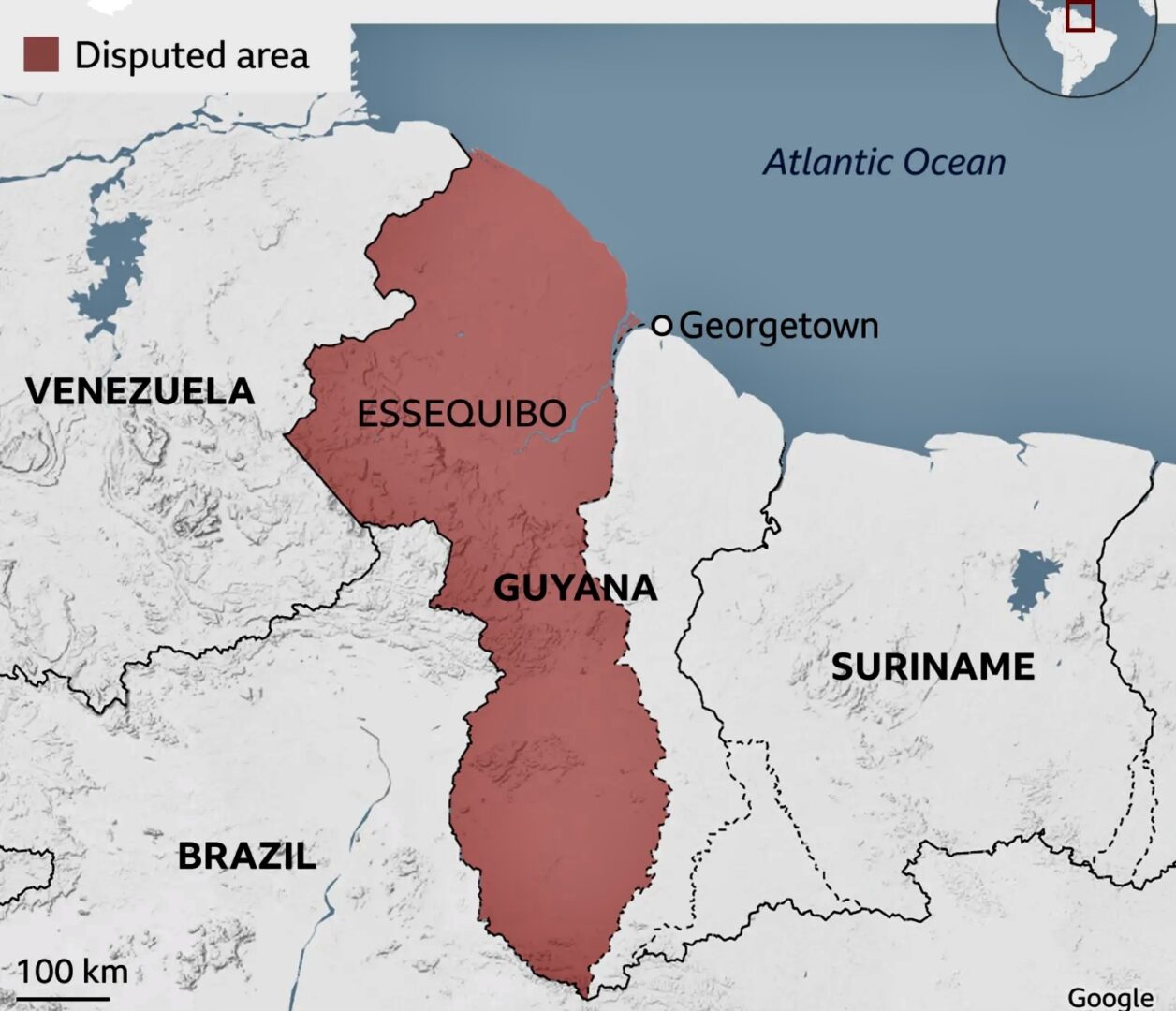
The Essequibo region remains one of the most significant long-standing territorial disputes in the Americas. This resource-rich territory, which constitutes roughly two-thirds of Guyana’s land area, is internationally recognised as part of the Co-operative Republic of Guyana but is claimed by the Bolivarian Republic of Venezuela under historical counter-claims to the 1899 Arbitral Award. The dispute has legal, economic, and diplomatic implications with potential consequences for treaty continuity and international responsibility.
Recent years have seen procedural escalations that raise legal continuity exposure. In 2024, Venezuela passed domestic legislation purporting to create a state of Guayana Esequiba within its territorial configuration, effectively integrating the area it claims. In 2025, Caracas held national and regional elections that included candidates and offices for this proposed entity — despite the territory being under Guyanese control and without polling stations within it.
In response, Guyana filed a case at the International Court of Justice (ICJ), seeking enforcement of provisional measures that require Venezuela to refrain from altering the status quo or conducting actions, including elections, that would affect the dispute. The ICJ has reaffirmed existing provisional measures and ordered Venezuela to refrain from conducting or preparing to conduct elections in the disputed territory. Venezuela has rejected the Court’s authority over the matter. A final decision on the merits of the case is expected in August 2026.
The reported abduction of Venezuelan President Nicolás Maduro in January 2026 will potentially freeze Venezuela’s long-standing territorial claims in a significant and unexpected change. This lessens the immediate risk of annexation, which might make Guyana’s offshore oil-rich projects safer.
These developments reflect a moderate escalation of the territorial dispute with implications for sovereignty signalling and recognition dynamics, prompting inclusion on the 2026 Watchlist.
Legal Continuity Exposure
Treaty and Territorial Continuity
The core legal question remains territorial sovereignty. Venezuela’s electoral and administrative actions relating to Essequibo challenge Guyana’s territorial administration and risk creating parallel claims that could complicate treaty obligations if actual governance structures were asserted. Under the ICJ’s provisional measures, Venezuela is legally bound – subject to its recognition of the Court’s authority – to refrain from actions that could alter the situation on the ground pending the Court’s final judgment.
Recognition and Sovereignty Change Dynamics
While Venezuela’s actions do not currently constitute effective control over Essequibo, unilateral electoral integration and legislative claims contribute to increased Recognition indicator sensitivity. Should Venezuela take further unilateral steps toward asserting functional governance, such moves could destabilise established recognition norms and affect the legal basis for sovereignty attribution.
International Responsibility and Compliance with Legal Orders
Venezuela’s stated refusal to recognise the ICJ’s authority directly affects the international responsibility dimension. Should the decision of the Court be disregarded, this raises questions regarding compliance with binding international legal obligations and the peaceful settlement of disputes under the UN Charter.
2026 Outlook
Three broad pathways are identifiable within 2026:
• Legal Containment. Venezuela complies with ICJ decision if the decision rendered, refrains from further electoral or administrative actions affecting the dispute, and engages in lawful processes. Sovereignty change exposure remains low.
• Procedural Escalation. Venezuela continues unilateral actions (e.g., symbolic electoral integration) without physical control, maintaining diplomatic tension and increasing recognition sensitivity without substantive territorial change.
• De Facto Assertion Scenario. Should Venezuela move toward asserting some form of functional control – through political, administrative, or security actions related to the disputed area – legal continuity risks would intensify significantly, potentially impacting treaty obligations and regional stability.
Sources:
● https://www.cnbc.com/2026/01/12/oil-trump-venezuela-guyana-essequibo-territorial-dispute.html
● https://www.theguardian.com/world/2025/may/02/venezuela-election-un-ruling-essequibo-guyana
● https://www.aljazeera.com/news/longform/2025/5/23/borders-and-ballots-why-essequibo-is-controversial-in-venezuelas-election
● https://www.politico.com/news/2026/01/08/donald-trump-run-venezuela-00715915
● https://www.bbc.com/news/articles/cjeww5zq88no
Somaliland
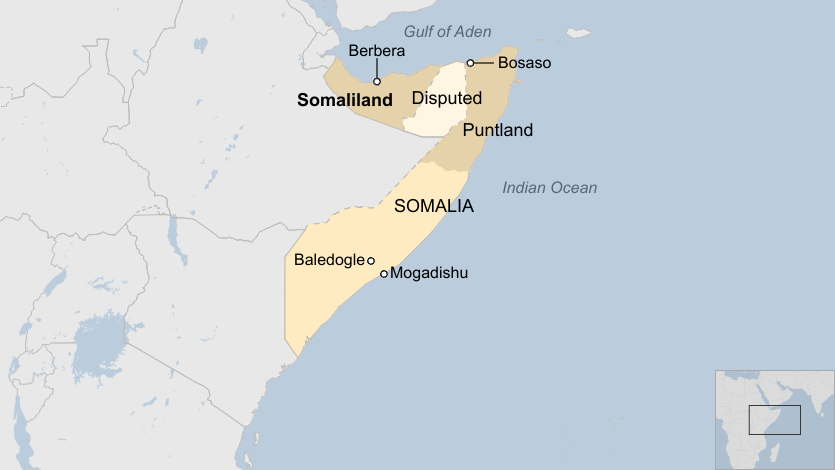
Risk Level: Medium–High (Emergent Recognition Momentum). Status: De Facto State; Limited Bilateral Recognition. Watchlist Basis: First formal recognition; Active diplomatic outreach; Potential recognition cascade.
Overview
The Republic of Somaliland, which declared independence from the Federal Republic of Somalia in 1991, has operated for over three decades as a de facto self-governing entity with functioning institutions, regular elections, and relative internal stability. Despite meeting several practical criteria of statehood, it has remained unrecognised by any UN Member State for most of that period.
On 26 December 2025, Israel formally recognised Somaliland, becoming the first UN Member State to do so. This marked a significant diplomatic breakthrough for Hargeisa and introduced a new variable into long-standing international consensus supporting Somalia’s territorial integrity.
The move generated opposition from Mogadishu and several regional actors, particularly within Africa and the Middle East. Somalia continues to assert full sovereignty over Somaliland and retains broad international recognition as the sole legitimate government of the territory.
In early 2026, Somaliland leadership intensified diplomatic outreach, including engagement with U.S. political figures at international forums. While Somaliland officials have expressed optimism about potential further recognitions, no additional UN Member State has formally extended recognition as of this reporting period. The United States continues to recognise Somalia’s unity and territorial integrity.
Legal Continuity Exposure
Recognition Breakthrough
Israel’s recognition represents a structural shift from total diplomatic isolation to partial recognition status. While one recognition does not establish universal statehood, it breaks the prior zero-recognition barrier, introduces the potential for incremental recognition expansion, and elevates recognition sensitivity within SSI metrics. The key analytical question is whether this recognition remains isolated or triggers a cascade effect.
De Facto Governance Versus De Jure Sovereignty
Somaliland maintains effective territorial control over most of the territory it claims, conducts elections, and administers public institutions independently of Mogadishu. However, Somalia retains international legal title in the eyes of the vast majority of states. Somaliland is not a member of the UN or other major multilateral institutions, and international treaty participation remains limited to informal or sub-state arrangements. This creates a prolonged divergence between effective governance and formal sovereignty recognition.
Succession and Treaty Implications
If broader recognition were to materialise, questions would arise regarding treaty succession from Somalia, boundary delimitation issues could re-emerge, asset and debt allocation would require negotiation, and membership in international organisations would become a central legal issue. At present, these exposures remain contingent rather than activated.
2026 Outlook
Two principal trajectories merit monitoring:
1. Isolated Recognition Scenario. Israel remains the sole recognising state, and diplomatic momentum stalls. Recognition exposure stabilises without cascade.
2. Incremental Recognition Expansion. One or more additional states extend recognition, strengthening Somaliland’s claim to international legal personality and raising succession planning exposure.
Analytical Note
Somaliland differs from Western Sahara in that it exercises sustained internal governance and has now secured at least one bilateral recognition. It differs from Palestine in that it lacks broad multilateral recognition but maintains more consolidated territorial administration.
Under SSI methodology, Somaliland scores:
• High Recognition Sensitivity (Post-Breakthrough Phase)
• Moderate Secession Entrenchment
• Contingent Treaty Succession Exposure
Its inclusion in the 2026 Watchlist reflects the potential inflection point created by initial recognition and the possibility – though not certainty – of further diplomatic movement.
Sources:
● https://www.theguardian.com/global-development/2025/may/30/exclusive-somaliland-president-says-recognition-of-state-on-the-horizon-following-trump-talks
● https://www.washingtoninstitute.org/policy-analysis/recognizing-somaliland-israels-return-red-sea
● https://www.aljazeera.com/features/2026/1/16/what-does-israel-want-in-somaliland
● https://www.bbc.com/news/articles/cje11eg7lp5;
● https://www.bbc.com/news/articles/c4g417md05go
Ukraine
Risk Level: Very High (Active Territorial Conflict). Status: Ongoing Armed Conflict; Partial Foreign Occupation. Watchlist Basis: Competing sovereignty claims; Annexation non-recognition; Potential armistice or partition scenarios.
Overview
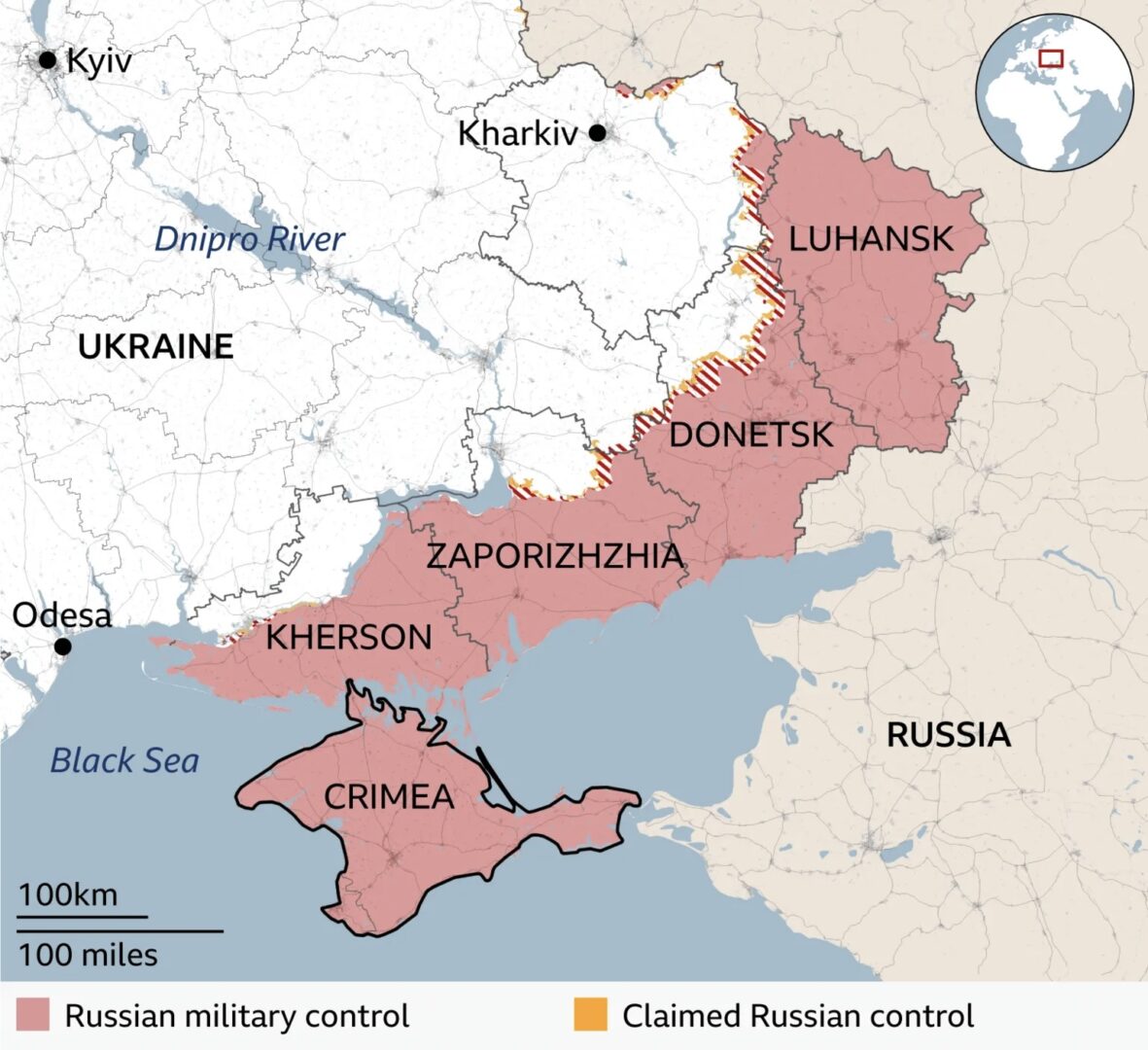
As of 2026, the armed conflict between Ukraine and the Russian Federation remains the most significant active territorial war in Europe. Approximately four years after Russia’s full-scale invasion in 2022, Russian forces continue to exercise control over substantial portions of eastern and southern Ukraine, including areas of Donetsk, Luhansk, Zaporizhzhia, and Kherson regions, in addition to Crimea annexed in 2014.
UN General Assembly resolutions and widespread state practice continue to affirm Ukraine’s territorial integrity within its internationally recognised borders.
Despite continued hostilities, diplomatic efforts intensified in late 2025 and early 2026. Discussions have reportedly centred on ceasefire modalities, territorial status, demilitarisation proposals, and security guarantees. However, fundamental disagreements persist:
• Moscow has insisted on recognition of its claimed annexations and broader territorial concessions.
• Kyiv has rejected formal cession of territory, citing constitutional and international legal constraints.
• Ukraine has prioritised binding security guarantees from external partners.
• Russia has sought long-term neutrality commitments and limitations on Ukraine’s military capacity.
No comprehensive settlement has been reached.
Legal Continuity Exposure
Annexation and Non-Recognition
Russia has formally declared the annexation of several Ukrainian regions following referendums widely regarded internationally as unlawful and conducted under occupation. These annexations have not been recognised by the vast majority of states. Under international law, effective control without lawful title does not automatically produce sovereignty transfer, so Ukraine remains internationally recognised as the sovereign over the occupied territories. This creates a prolonged condition of de facto territorial control by Russia, de jure sovereignty retained by Ukraine, and a sustained non-recognition regime.
Armistice or Frozen Conflict Scenario
Should a ceasefire be reached without resolution of sovereignty claims, a “frozen conflict” arrangement could emerge. In such a case, territorial status would remain legally contested, treaty application questions could arise in occupied areas, and sanctions and recognition regimes would likely persist. Such an outcome would generate enduring legal ambiguity concerning governance, responsibility, and territorial administration.
Formal Territorial Settlement Scenario
A negotiated settlement involving formal territorial cession would represent a major state succession event with significant implications for:
• Boundary modification,
• Nationality of affected populations,
• Treaty continuity,
• Asset and debt allocation,
• International organisational representation.
At present, this scenario remains politically and legally remote due to Ukrainian constitutional constraints and international non-recognition principles.
2026 Outlook
Two principal trajectories merit monitoring:
1. Ceasefire Without Settlement. Hostilities pause but sovereignty claims remain unresolved, producing a protracted frozen conflict model.
2. Continued Attritional Conflict. No settlement is reached; front lines shift incrementally without legal status change.
Analytical Note
Ukraine represents a case of high-intensity territorial contestation without recognised sovereignty transfer.
Under SSI methodology, it scores:
• Very High Territorial Control Disruption
• Very High Recognition Sensitivity
• Latent but Significant Succession Exposure (Contingent on Settlement)
Unlike negotiated cases such as Bougainville, Ukraine’s situation is defined by armed conflict and annexation claims lacking broad international recognition. The principal legal question for 2026 is not immediate state creation, but whether diplomatic developments could convert de facto control into a formally reconfigured territorial settlement.
Sources:
● https://www.politico.eu/article/peace-deal-between-russia-ukraine-looks-close-except-territory-security-ceasefire-zelenskyy-putin/
● https://www.csis.org/analysis/russias-grinding-war-ukraine
● https://www.atlanticcouncil.org/blogs/ukrainealert/all-of-ukraine-is-ours-putins-russian-imperialism-is-now-on-full-display/#:~:text=He%20has%20also%20said%20that%20Putin’s%20statements,and%20justify%20his%20campaign%20of%20imperial%20aggression
● https://www.newsweek.com/ukraine-war-maps-show-ground-won-lost-in-2025-11254542
● https://www.pbs.org/newshour/world/ceding-land-to-russia-not-only-unpopular-in-ukraine-but-also-illegal
● https://www.bbc.com/news/articles/c0l0k4389g2o
Greenland/Denmark
Risk Level: Low–Medium (External Annexation Rhetoric). Status: Autonomous Territory within the Kingdom of Denmark. Watchlist Basis: External sovereignty claims; Alliance tension; No internal secession activation.
Overview
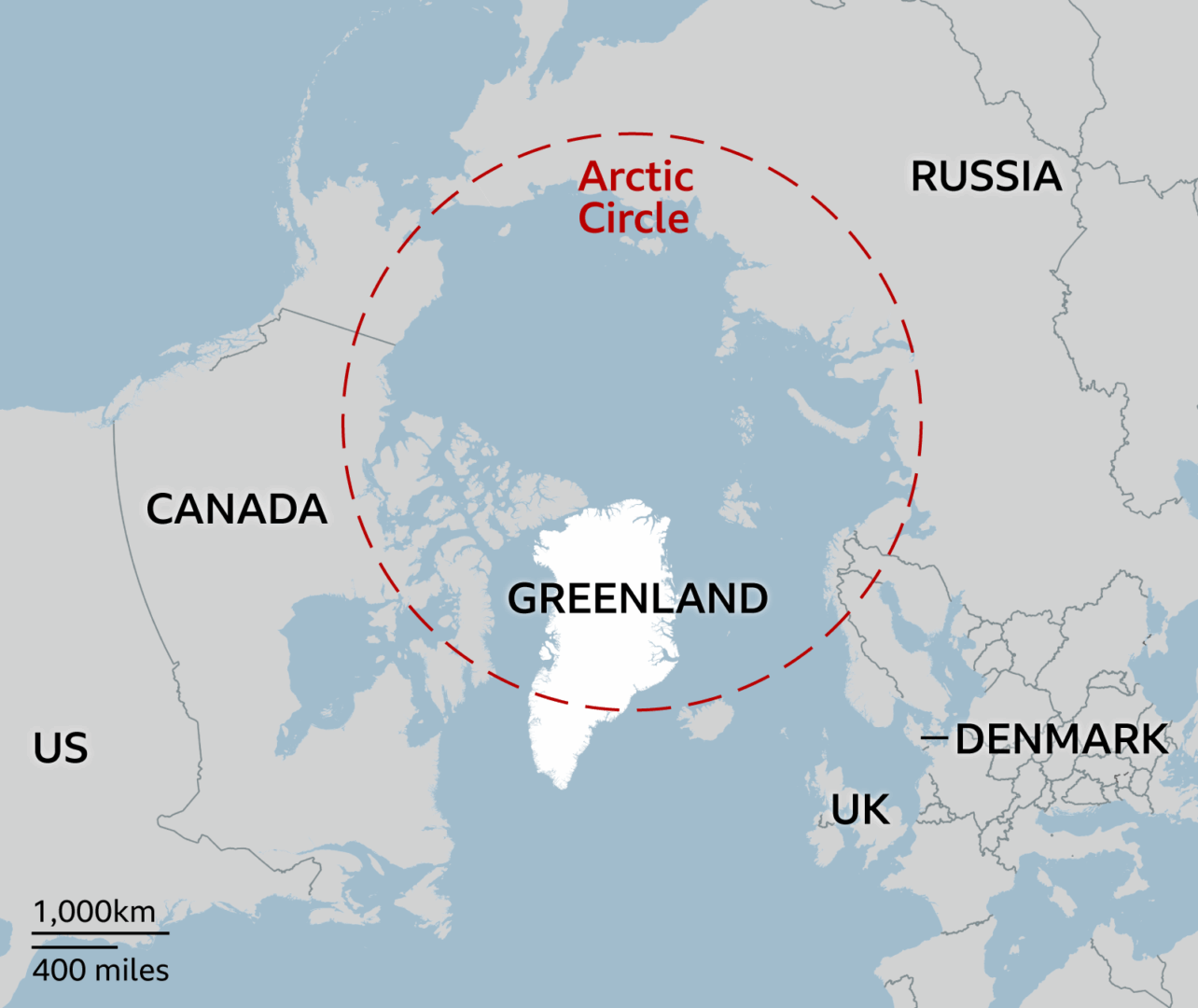
In early 2026, renewed statements by U.S. President Donald Trump advocating the acquisition of Greenland reintroduced external annexation rhetoric into Arctic geopolitics. Greenland is a self-governing territory within the Kingdom of Denmark, exercising extensive autonomy under the 2009 Self-Government Act while Denmark retains responsibility for foreign affairs, defence, and monetary policy.
President Trump publicly expressed continued interest in negotiating the cession of Greenland to the United States, reiterating positions first advanced during his prior term. Statements included references to potential economic leverage and, at one stage, speculative remarks regarding military options, though such remarks were later walked back.
Both the Danish government and Greenlandic authorities firmly rejected any transfer of sovereignty. Public opinion polling in Denmark, Greenland, and the United States indicates strong opposition to annexation.
The issue generated diplomatic friction within NATO and the European Union, with several European states signalling political and symbolic support for Denmark’s sovereignty position.
Legal Continuity Exposure
Absence of Internal Secession Movement. Unlike other Watchlist cases, Greenland does not currently exhibit an activated internal secession process aimed at external annexation. Greenland retains the right under Danish law to pursue independence through referendum, but no active independence-to-annexation pathway is presently in motion. The annexation discussion originates externally rather than internally.
Sovereignty and Non-Use of Force Principles
Under international law, acquisition of territory by force is prohibited. Any lawful sovereignty transfer would require:
• The consent of Denmark,
• Democratic endorsement within Greenland,
• Compliance with domestic constitutional procedures,
• International recognition.
Given the categorical rejection by Copenhagen and Nuuk, no lawful pathway toward annexation is currently operational.
Alliance and Security Dimension. The rhetorical escalation nonetheless introduces diplomatic strain within NATO, strategic recalibration discussions in the Arctic, and sensitivity regarding foreign troop deployments. These developments affect geopolitical stability but do not presently trigger classical state succession or treaty continuity risk.
2026 Outlook
Three principal scenarios merit monitoring:
1. Rhetorical Containment. Annexation rhetoric subsides without institutional follow-through, returning the issue to diplomatic background status.
2. Diplomatic Escalation Without Legal Change. Continued public pressure generates alliance friction but no constitutional or sovereignty alteration.
Analytical Note
Greenland differs fundamentally from cases such as Bougainville or Somaliland. There is no active secession referendum underway, no recognised sovereignty transfer process, and no change in effective control. The current development reflects external annexation advocacy without legal activation.
Under SSI methodology, Greenland scores:
• Low Immediate Succession Risk
• Moderate Geopolitical Sensitivity
• Minimal Recognition Volatility
Its inclusion in the 2026 Watchlist reflects heightened sovereignty rhetoric and alliance implications rather than imminent territorial change.
Sources:
● https://www.politico.com/news/2026/01/29/greenland-cables-state-department-europe-nato-00754262
● https://www.cnbc.com/2026/01/29/greenland-denmark-us-trump-talks-arctic-security-nato.html
● https://www.cnbc.com/2026/01/21/trump-tariffs-nato-greenland-davos.html
● https://www.politico.com/news/2026/01/29/greenland-cables-state-department-europe-nato-00754262
● https://www.nytimes.com/2026/01/20/world/europe/europe-troops-greenland-trump.html
● https://www.reuters.com/world/europe/just-one-five-americans-support-trumps-efforts-acquire-greenland-reutersipsos-2026-01-14/
● https://www.theguardian.com/world/2025/jan/31/nearly-half-of-danes-see-us-as-threat-and-78-oppose-greenland-sale-poll-shows